Have your feet inspected by a professional before starting a new sport or physical activity. Taking charge of your foot health will keep you in good physical condition and can help you avoid a potential injury, such as a fracture or sprained ankle.
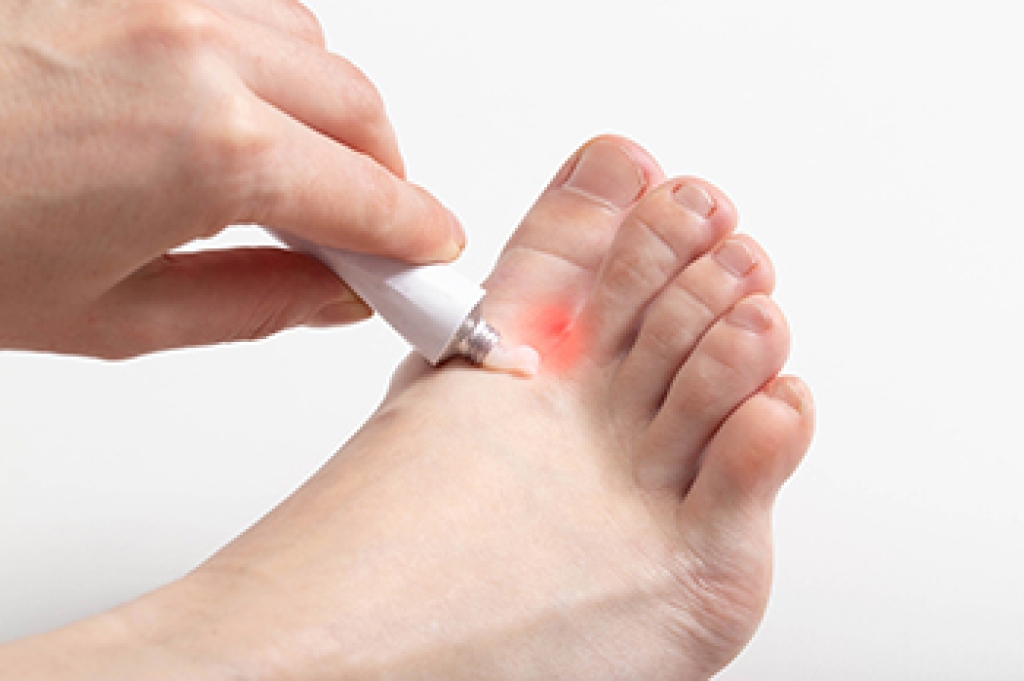
Athlete’s foot, also known as tinea pedis, is a fungal infection that results in inflammation, redness, itchiness, and scaling between the toes. It can also cause blistering on the bottom of the feet. This is a highly contagious infection and can be brought on by wearing wet or sweaty shoes or by walking barefoot on contaminated wet floors. Common areas to pick up athlete’s foot are pools, locker rooms, and public showers. Athlete’s foot can be difficult to cure and may come back again or turn into a bacterial infection if left untreated. There is more than one type of athlete’s foot. The three types of this fungal infection are interdigital, moccasin, and vestibular infections. An interdigital infection affects the skin between the toes. A moccasin infection covers the sole of the foot and can spread to the heel and edges of the feet. A vestibular infection can appear between the toes or the soles of the feet and can cause blisters or vesicles filled with pus that can burst open and cause open sores. Because athlete’s foot can sometimes be misdiagnosed, it is suggested that if you have these types of symptoms, an appointment is made with a podiatrist who can accurately diagnose and offer treatment options for athlete’s foot.
Athlete’s Foot
Athlete’s foot is often an uncomfortable condition to experience. Thankfully, podiatrists specialize in treating athlete’s foot and offer the best treatment options. If you have any questions about athlete’s foot, consult with Wendy L. Grossman, DPM from New Jersey. Our doctor will assess your condition and provide you with quality treatment.
What Is Athlete’s Foot?
Tinea pedis, more commonly known as athlete’s foot, is a non-serious and common fungal infection of the foot. Athlete’s foot is contagious and can be contracted by touching someone who has it or infected surfaces. The most common places contaminated by it are public showers, locker rooms, and swimming pools. Once contracted, it grows on feet that are left inside moist, dark, and warm shoes and socks.
Prevention
The most effective ways to prevent athlete’s foot include:
Thoroughly washing and drying feet
Avoid going barefoot in locker rooms and public showers
Using shower shoes in public showers
Wearing socks that allow the feet to breathe
Changing socks and shoes frequently if you sweat a lot
Symptoms
Athlete’s foot initially occurs as a rash between the toes. However, if left undiagnosed, it can spread to the sides and bottom of the feet, toenails, and if touched by hand, the hands themselves. Symptoms include:
Redness
Burning
Itching
Scaly and peeling skin
Diagnosis and Treatment
Diagnosis is quick and easy. Skin samples will be taken and either viewed under a microscope or sent to a lab for testing. Sometimes, a podiatrist can diagnose it based on simply looking at it. Once confirmed, treatment options include oral and topical antifungal medications.
If you have any questions, please feel free to contact our office located in Bloomfield, NJ. We offer the newest diagnostic and treatment technologies for all your foot care needs.
A plantar fibroma causes soft tissue swelling in the sole of the foot. Sometimes when a patient has this affliction, one or more nodules can form in the soft tissue of the feet. It can happen in one foot or both feet at the same time. This condition can cause painful swelling in the feet and walking can be difficult. Plantar fibromas can be confused with benign Morton neuromas, cysts or more serious and malignant sarcomas. If you have swelling or uncomfortable foot nodules, it is strongly suggested that you make an appointment with a podiatrist. This foot and ankle expert can provide a proper diagnosis using radiographic imaging and suggest appropriate treatment.
A plantar fibroma may disrupt your daily activities. If you have any concerns, contact Wendy L. Grossman, DPM
of New Jersey. Our doctor can provide the care you need to keep you pain-free and on your feet.
Plantar Fibroma
A plantar fibroma is a fibrous knot in the arch of the foot. It is embedded in the plantar fascia which is a band of tissue that extends from the heel to the toes along the bottom of the foot. There can be multiple plantar fibromas in the feet at the same time. There are no known causes for this condition. If you have a plantar fibroma, there will be a bump in the arch of your foot that cannot be missed. Any associated pain is most often due to a shoe rubbing against the nodule. Non-surgical options, such as steroid injections, physical therapy, and orthotics should be tried first. Surgery is a last resort and is the only thing that will remove a plantar fibroma entirely. Consult with a podiatrist for a proper diagnosis and to determine the treatment regimen that is right for you.
What Causes a Plantar Fibroma?
While there are no specific causes identified, a plantar fibroma can possibly come from genetic predisposition or the formation of scar tissue that forms from healing the tears in the plantar fascia.
What Are the Symptoms of a Plantar Fibroma?
There will be a noticeable lump in the arch of the foot that may or may not cause pain. If pain is felt, it is typically because a shoe is rubbing up against the lump or when walking or standing barefoot.
Treatment and Prevention
A plantar fibroma will not disappear without treatment, but it can get smaller and be a non-issue. If pain persists, a podiatrist examines the foot and when the arch of the foot is pressed, pain can be felt down to the toes. An MRI or biopsy might be performed to help diagnose or evaluate the plantar fibroma. The following non-surgical options are generally enough to reduce the size and pain of these nodules:
Steroid injections
Orthotics
Physical therapy to help apply anti-inflammatory creams on the bump
Surgery is considered if the mass increases in size and the patient continues to feel pain after non-surgical methods are tried.
If you have any questions, please feel free to contact our office located in Bloomfield, NJ. We offer the newest diagnostic and treatment technologies for all your foot care needs.
Practicing good diabetic foot care is essential for maintaining proper foot health. Having elevated glucose levels in the blood can lead to developing diabetes, and the feet are often affected. Research has shown that approximately half of diabetic patients have nerve damage, which is the inability to feel existing cuts, bruises, or scrapes that are on the feet. A foot care routine can begin with washing and drying the feet, followed by inspecting the soles of the feet for any abnormalities. This can be done by using a mirror, or a family member or caregiver may be able to help. Effective foot care tips can include following a healthy eating plan, engaging in a gentle exercise program, and refraining from smoking, if applicable. It is important to wear shoes while walking inside or outdoors, in addition to trimming the toenails straight across. If you have diabetes, it is strongly suggested that you confer with a podiatrist who can help you to manage this serious condition.
Diabetic foot care is important in preventing foot ailments such as ulcers. If you are suffering from diabetes or have any other concerns about your feet, contact Wendy L. Grossman, DPM
from New Jersey. Our doctor can provide the care you need to keep you pain-free and on your feet.
Diabetic Foot Care
Diabetes affects millions of people every year. The condition can damage blood vessels in many parts of the body, especially the feet. Because of this, taking care of your feet is essential if you have diabetes, and having a podiatrist help monitor your foot health is highly recommended.
The Importance of Caring for Your Feet
Routinely inspect your feet for bruises or sores.
Wear socks that fit your feet comfortably.
Wear comfortable shoes that provide adequate support.
Patients with diabetes should have their doctor monitor their blood levels, as blood sugar levels play such a huge role in diabetic care. Monitoring these levels on a regular basis is highly advised.
It is always best to inform your healthcare professional of any concerns you may have regarding your feet, especially for diabetic patients. Early treatment and routine foot examinations are keys to maintaining proper health, especially because severe complications can arise if proper treatment is not applied.
If you have any questions, please feel free to contact our office located in Bloomfield, NJ. We offer the newest diagnostic and treatment technologies for all your foot care needs.
A small, hard growth that develops on the underside of the heel may be a heel spur. It is defined as a calcium deposit and extends between the arch and the heel. Some heel spurs can be up to a half inch long, and may or may not be painful. Some of the symptoms that are associated with a heel spur are swelling surrounding the heel, the skin feeling warm when touched, and being inflamed. The cause of a heel spur is muscle and ligament strain, and can gradually develop as the aging process occurs. They may also happen from wearing shoes that are worn out, having excess body weight, or if there is an abnormal foot structure. An X-ray is often taken that can confirm a heel spur, and can be treated through adequate rest and lifestyle changes. It may be beneficial to perform gentle stretches that can help to strengthen the muscles. If you feel pain or mild discomfort in your heel, it is suggested that you speak with a podiatrist who can accurately diagnose and treat heel spurs.
Heel spurs can be incredibly painful and sometimes may make you unable to participate in physical activities. To get medical care for your heel spurs, contact Wendy L. Grossman, DPM from New Jersey. Our doctor will do everything possible to treat your condition.
Heels Spurs
Heel spurs are formed by calcium deposits on the back of the foot where the heel is. This can also be caused by small fragments of bone breaking off one section of the foot, attaching onto the back of the foot. Heel spurs can also be bone growth on the back of the foot and may grow in the direction of the arch of the foot.
Older individuals usually suffer from heel spurs and pain sometimes intensifies with age. One of the main condition's spurs are related to is plantar fasciitis.
Pain
The pain associated with spurs is often because of weight placed on the feet. When someone is walking, their entire weight is concentrated on the feet. Bone spurs then have the tendency to affect other bones and tissues around the foot. As the pain continues, the feet will become tender and sensitive over time.
Treatments
There are many ways to treat heel spurs. If one is suffering from heel spurs in conjunction with pain, there are several methods for healing. Medication, surgery, and herbal care are some options.
If you have any questions, please feel free to contact our office located in Bloomfield, NJ. We offer the newest diagnostic and treatment technologies for all your foot care needs.