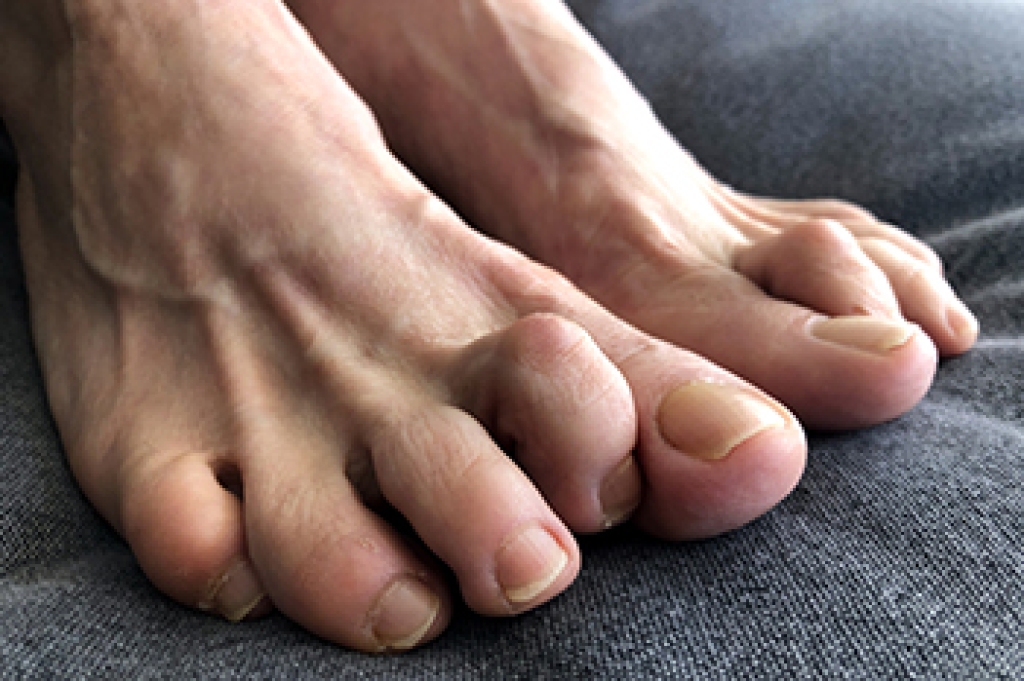
Dealing With Hammertoe

Hammertoe is a deformity that is usually found in the second toe. It is caused by an imbalance of the muscles, tendons, and ligaments that work together to make the toe straight. The result is that the middle joint of the toe raises up to form a peak, while the tip of the toe curls under. The type of shoes you wear, foot structure, and genetics all can contribute to the formation of a hammertoe. Women who wear high heels with pointy toes and children who wear shoes that are too short for their feet are more at risk of developing a hammertoe. Some people are simply born that way. Pain from a hammertoe occurs when the raised joint rubs against the inside of the top of the shoe. A corn or callus can develop, which may affect the gait and can increase pain in other parts of the foot and the body.  A podiatrist can give you options for treating a hammertoe. Devices called hammertoe regulators can be custom fitted to help straighten the toe. Gentle exercises, such as picking up a towel with your toes can stretch and straighten the small muscles of the feet. In severe cases, surgery can be performed to permanently straighten the toe. For details on treatment options, please consult a podiatrist. 

Hammertoe

Hammertoes can be a painful condition to live with. For more information, contact Wendy L. Grossman, DPM from New Jersey. Our doctor will answer any of your foot- and ankle-related questions.

Hammertoe is a foot deformity that affects the joints of the second, third, fourth, or fifth toes of your feet. It is a painful foot condition in which these toes curl and arch up, which can often lead to pain when wearing footwear.

Symptoms

  • Pain in the affected toes
  • Development of corns or calluses due to friction
  • Inflammation
  • Redness
  • Contracture of the toes

Causes

Genetics – People who are genetically predisposed to hammertoe are often more susceptible

Arthritis – Because arthritis affects the joints in your toes, further deformities stemming from arthritis can occur

Trauma – Direct trauma to the toes could potentially lead to hammertoe

Ill-fitting shoes – Undue pressure on the front of the toes from ill-fitting shoes can potentially lead to the development of hammertoe

Treatment

Orthotics – Custom made inserts can be used to help relieve pressure placed on the toes and therefore relieve some of the pain associated with it

Medications – Oral medications such as anti-inflammatories or NSAIDs could be used to treat the pain and inflammation hammertoes causes. Injections of corticosteroids are also sometimes used

Surgery – In more severe cases where the hammertoes have become more rigid, foot surgery is a potential option

If you have any questions, please feel free to contact our office located in Bloomfield, NJ . We offer the newest diagnostic and treatment technologies for all your foot care needs.


Read more about What Are Hammertoes?

Joint Replacement for Arthritis of the Big Toe

The base of the big toe is a common site for degenerative changes in the foot. Wear and tear and loss of elasticity in the cartilage cushioning the joint of the big toe can cause pain, swelling, and stiffness in the area. With the big toe moving up each time a step is taken, walking can be uncomfortable. Bone spurs can develop on the joint aggravating the pain already felt when walking with big toe arthritis. A bump, like a bunion or a callus, can also develop on the top of the foot with this affliction. When rest, medication, and exercise stop working, surgical options are considered. One such option is toe joint replacement. This is usually done among older sufferers with advanced arthritis. With toe joint replacement, an artificial joint made from ceramic, plastic, or metal, is surgically implanted after removing damaged parts of bones and cartilage in the big toe. This can be done under general or regional anesthesia and usually takes less than one hour. If you have advanced arthritis in your big toe and other less invasive treatments have not provided you enough relief to live life comfortably, talk to a podiatrist to see if you might be a good candidate for joint replacement surgery.

In certain cases, in which the patient suffers from extreme pain or damage in a joint, joint replacement surgery may be deemed useful. If you have constant pain in a foot joint, consult with Wendy L. Grossman, DPM from New Jersey. Our doctor will assess your condition and provide you with quality foot and ankle treatment.

What Is Joint Replacement Surgery?

Over time, joints wear down; this can be exacerbated by diseases and conditions. Joint replacement surgery, also known as arthroplasty, is when a damaged joint is surgically removed and replaced with a prosthesis. Prostheses, which can be made of ceramic, plastic, or metal, act as joints in lieu of an actual joint. One of the most prevalent causes for joint replacement is arthritis.

Arthritis in the Foot

Arthritis can occur in any joint in the body, including in the feet. Common types of arthritis in the foot are osteoarthritis, rheumatoid arthritis, and gout. The big toe is usually where arthritis occurs in the foot; this is known as hallux rigidus.

Joint Replacement Surgery in the Foot

The most common form of joint replacement in the foot is a first metatarsophalangeal (MTP) joint placement. MTP joint replacement surgery is designed to treat hallux rigidus. Surgery is not intensive, and recovery occurs within one to two months after the procedure has been done. Overall, joint replacement surgery is a safe and effective way to treat pain in the joint of the foot.

If you have any questions, please feel free to contact our office located in Bloomfield, NJ . We offer the newest diagnostic and treatment technologies for all your foot care needs.
Read more about Joint Replacement Surgery

Various Reasons Why Pain in the Big Toe Can Occur

There are reasons that pain in the big toe can occur. It may happen suddenly from an injury or it can gradually occur. Pain in this toe may be a symptom indicating an existing medical condition and a podiatrist can determine what that condition is. Gout is a condition that develops suddenly and affects the joints in the big toe. It can produce excruciating pain and discomfort and may be controlled by the types of foods that are eaten. Additionally, a bunion is another condition that gradually occurs. Bunions are characterized by a bony protrusion that forms on the side of the big toe. Severe bunions may cause pain and larger shoes may need to be purchased to accommodate the bunion. Some people develop ingrown toenails which generally affects the big toe. When left untreated, an infection may occur and medical attention is often sought. A sudden injury can produce a broken toe and relief and stability may be found when the affected toe is taped to the toe next to it. If you have pain in your big toe, it is strongly advised that you consult with a podiatrist who can determine what the cause is followed by implementing effective treatment strategies.

Toe pain can disrupt your daily activities. If you have any concerns, contact Wendy L. Grossman, DPM of New Jersey. Our doctor can provide the care you need to keep you pain-free and on your feet.

What Causes Toe Pain?

Most severe toe pain is caused due to a sports injury, trauma from dropping something heavy on the toe, or bumping into something rigid. Other problems can develop over time for various reasons.

Toe pain can be caused by one or more ailments. The most common include:

  • Trauma
  • Sports injury
  • Wearing shoes that are too tight
  • Arthritis
  • Gout
  • Corns and calluses
  • Hammertoe
  • Bunions
  • Blisters
  • Ingrown toenails
  • Sprains
  • Fractures (broken bones)
  • Dislocations

When to See a Podiatrist

  • Severe pain
  • Persistent pain that lasts more than a week
  • Signs of infection
  • Continued swelling
  • Pain that prevents walking

Diagnosis

In many cases the cause of toe pain is obvious, but in others, a podiatrist may want to use more advanced methods to determine the problem. These can range from simple visual inspections and sensation tests to X-rays and MRI scans. Prior medical history, family medical history, and any recent physical traumatic events will all be taken into consideration for a proper diagnosis.

Treatment

Treatments for toe pain and injuries vary and may include shoe inserts, padding, taping, medicines, injections, and in some cases, surgery. If you believe that you have broken a toe, please see a podiatrist as soon as possible.

If you have any questions please contact our office located in Bloomfield, NJ . We offer the newest diagnostic and treatment technologies for all your foot and ankle needs.

Read more about Toe Pain

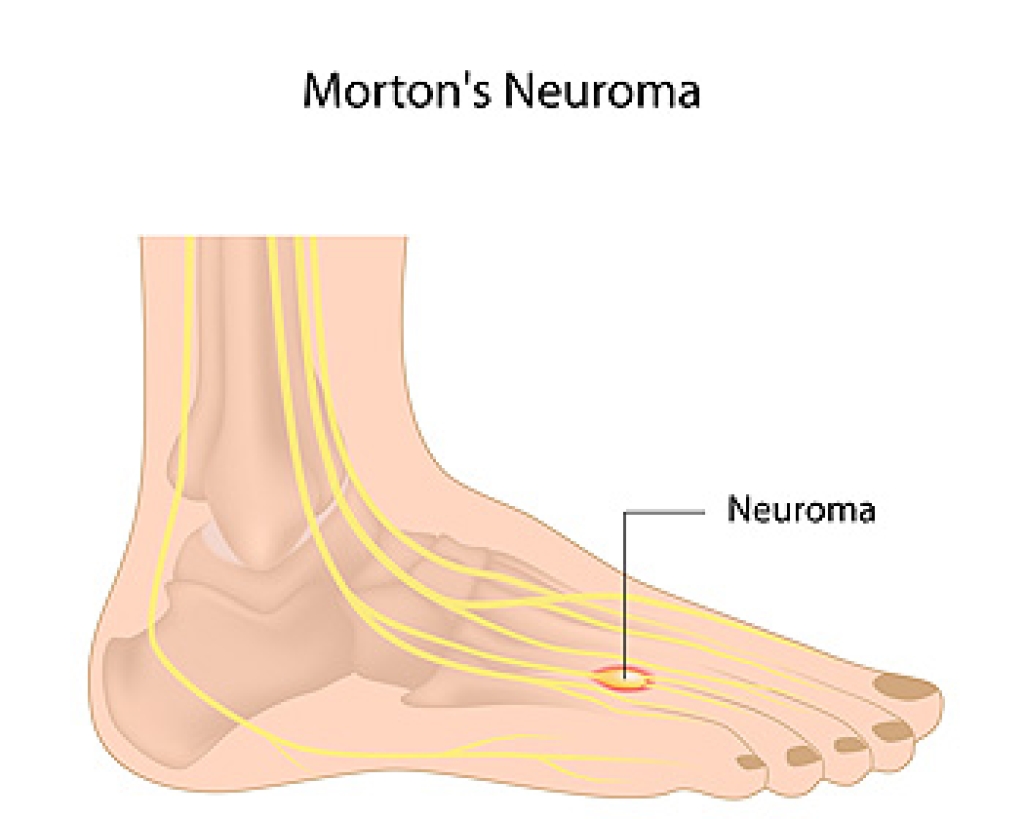
How to Find Relief With Morton’s Neuroma

One of the most common symptoms that patients notice with the foot condition that is referred to as Morton’s neuroma is the sensation of having a pebble in the shoe. It can cause continuous pain in the ball of the foot, and it most often happens as a result of frequently wearing high heels. These types of shoes generally do not provide ample room for the toes to move freely in, possibly causing the nerve between the third and fourth toes to become irritated. Additional symptoms can include having a numbing or tingling feeling in the toes, and a burning pain may exist in the ball of the foot. Patients have found relief in the beginning stages of Morton’s neuroma when shoes with lower heels are worn, and participating in sporting activities is temporarily ceased. In severe cases, surgery may be necessary, which can permanently repair or remove the affected nerve. If you feel you may have this condition, please speak with a podiatrist who can help you to decide on the correct treatment method.

Morton’s neuroma is a very uncomfortable condition to live with. If you think you have Morton’s neuroma, contact Wendy L. Grossman, DPM of New Jersey. Our doctor will attend to all of your foot care needs and answer any of your related questions.  

Morton’s Neuroma

Morton's neuroma is a painful foot condition that commonly affects the areas between the second and third or third and fourth toe, although other areas of the foot are also susceptible. Morton’s neuroma is caused by an inflamed nerve in the foot that is being squeezed and aggravated by surrounding bones.

What Increases the Chances of Having Morton’s Neuroma?

  • Ill-fitting high heels or shoes that add pressure to the toe or foot
  • Jogging, running or any sport that involves constant impact to the foot
  • Flat feet, bunions, and any other foot deformities

Morton’s neuroma is a very treatable condition. Orthotics and shoe inserts can often be used to alleviate the pain on the forefront of the feet. In more severe cases, corticosteroids can also be prescribed. In order to figure out the best treatment for your neuroma, it’s recommended to seek the care of a podiatrist who can diagnose your condition and provide different treatment options.

If you have any questions, please feel free to contact our office located in Bloomfield, NJ . We offer the newest diagnostic and treatment technologies for all your foot care needs.

Read more about Morton's Neuroma

Symptoms of an Achilles Tendon Injury

People who have endured an Achilles tendon injury may have to temporarily alter their lives. It generally happens as a result of an injury that affects the Achilles tendon, and walking may be impossible until proper treatment is provided. This tendon is located in the calf, and connects the calf muscles to the heel. An injury can cause this tendon to rupture, or it may become inflamed from overuse. This can happen from running on uneven surfaces, or from increasing speed and mileage too quickly. If the injury happens from gradual overuse, common symptoms may include stiffness in the heel area after arising, and it can be difficult to flex the foot. Symptoms from a sudden injury can consist of intense pain in the calf and heel, the inability to stand on tiptoes, and a popping sound may be heard. If you have any of the above symptoms, please contact a podiatrist as quickly as possible so the correct treatment can begin.

Achilles tendon injuries need immediate attention to avoid future complications. If you have any concerns, contact Wendy L. Grossman, DPM of New Jersey. Our doctor can provide the care you need to keep you pain-free and on your feet.

What Is the Achilles Tendon?

The Achilles tendon is a tendon that connects the lower leg muscles and calf to the heel of the foot. It is the strongest tendon in the human body and is essential for making movement possible. Because this tendon is such an integral part of the body, any injuries to it can create immense difficulties and should immediately be presented to a doctor.

What Are the Symptoms of an Achilles Tendon Injury?

There are various types of injuries that can affect the Achilles tendon. The two most common injuries are Achilles tendinitis and ruptures of the tendon.

Achilles Tendinitis Symptoms

  • Inflammation
  • Dull to severe pain
  • Increased blood flow to the tendon
  • Thickening of the tendon

Rupture Symptoms

  • Extreme pain and swelling in the foot
  • Total immobility

Treatment and Prevention

Achilles tendon injuries are diagnosed by a thorough physical evaluation, which can include an MRI. Treatment involves rest, physical therapy, and in some cases, surgery. However, various preventative measures can be taken to avoid these injuries, such as:

  • Thorough stretching of the tendon before and after exercise
  • Strengthening exercises like calf raises, squats, leg curls, leg extensions, leg raises, lunges, and leg presses

If you have any questions please feel free to contact our office located in Bloomfield, NJ . We offer the newest diagnostic tools and technology to treat your foot and ankle needs.

Read more about The Causes, Types, and Treatments of Achilles Tendon Injuries

Connect With Us