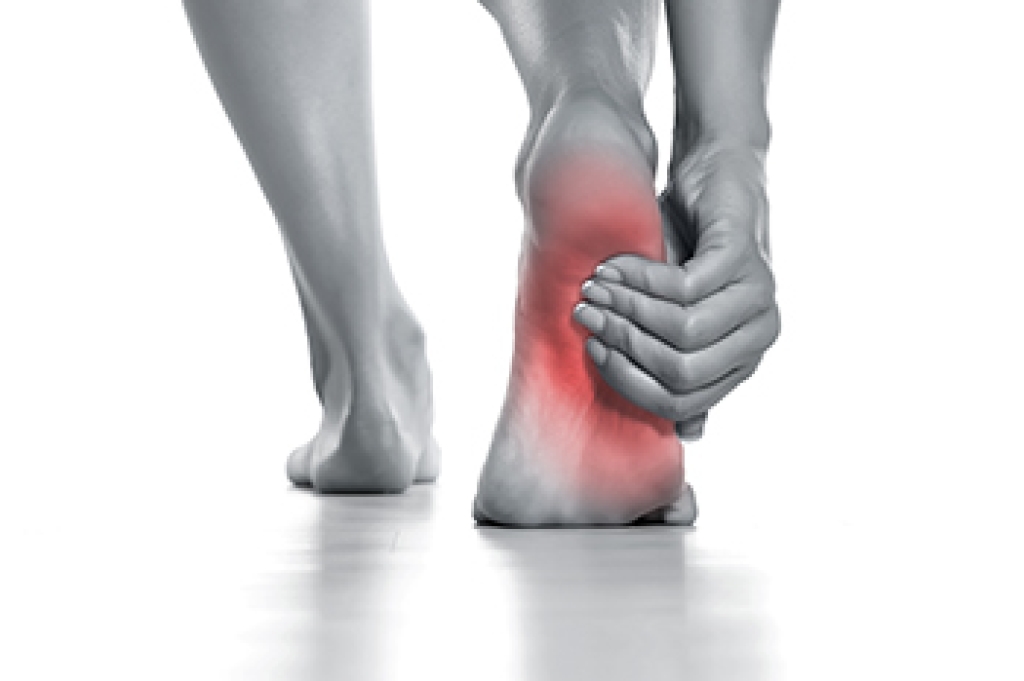
Heel Pain While Walking

Heel pain stemming from walking can arise from various underlying conditions, including plantar fasciitis, fat pad atrophy, arthritis, and Achilles tendonitis. Plantar fasciitis involves inflammation of the plantar fascia, the tissue connecting the heel to the toes. This condition commonly causes sharp pain upon initial steps in the morning. Fat pad atrophy results in decreased cushioning under the heel, leading to discomfort with weight-bearing activities. Arthritis may cause stiffness and pain in the heel, particularly during movement. Achilles tendonitis involves inflammation of the Achilles tendon, typically causing pain at the back of the heel. A podiatrist offers specialized care for heel pain, providing a thorough evaluation to determine the underlying cause. Treatment options may include custom orthotics, stretching exercises, anti-inflammatory medications, or corticosteroid injections. In severe cases, surgical intervention may be necessary. If you are experiencing heel pain that is interfering with your mobility, it is suggested that you schedule an appointment with a podiatrist for management options.

Many people suffer from bouts of heel pain. For more information, contact Wendy L. Grossman, DPM of New Jersey. Our doctor can provide the care you need to keep you pain-free and on your feet.

Causes of Heel Pain

Heel pain is often associated with plantar fasciitis. The plantar fascia is a band of tissues that extends along the bottom of the foot. A rip or tear in this ligament can cause inflammation of the tissue.

Achilles tendonitis is another cause of heel pain. Inflammation of the Achilles tendon will cause pain from fractures and muscle tearing. Lack of flexibility is also another symptom.

Heel spurs are another cause of pain. When the tissues of the plantar fascia undergo a great deal of stress, it can lead to ligament separation from the heel bone, causing heel spurs.

Why Might Heel Pain Occur?

  • Wearing ill-fitting shoes                
  • Wearing non-supportive shoes
  • Weight change           
  • Excessive running

Treatments

Heel pain should be treated as soon as possible for immediate results. Keeping your feet in a stress-free environment will help. If you suffer from Achilles tendonitis or plantar fasciitis, applying ice will reduce the swelling. Stretching before an exercise like running will help the muscles. Using all these tips will help make heel pain a condition of the past.

If you have any questions, please feel free to contact our office located in Bloomfield, NJ . We offer the newest diagnostic and treatment technologies for all your foot care needs.


Read more about Heel Pain

Foot Exercises for Balance and Stability

Maintaining balance and stability is essential for daily activities and overall well-being. Incorporating specific foot stretches into your routine can help strengthen muscles, improve proprioception, and enhance stability. One effective exercise is toe-tapping, where you alternate tapping your toes on the ground while keeping your heels stationary. This movement engages the muscles in your feet and ankles, promoting better balance. Another beneficial exercise is heel-to-toe walking, also known as tandem walking, where you walk in a straight line placing the heel of one foot directly in front of the toes of the opposite foot. This exercise challenges your balance and awareness of your body movement, helping to improve coordination and stability. Practicing single-leg balance exercises, such as standing on one foot for increasing durations, can further enhance stability. By incorporating these foot exercises into your daily routine, you can strengthen your foundation, improve balance, and reduce the risk of falls and injuries, ultimately supporting your overall health and mobility. If you are seeking additional foot stretches to perform, it is suggested that you consult a podiatrist who can provide you with the knowledge you are looking for.

Stretching the feet is a great way to prevent injuries. If you have any concerns with your feet consult with Wendy L. Grossman, DPM from New Jersey. Our doctor will assess your condition and provide you with quality foot and ankle treatment.

Stretching the Feet

Being the backbone of the body, the feet carry your entire weight and can easily become overexerted, causing cramps and pain. As with any body part, stretching your feet can serve many benefits. From increasing flexibility to even providing some pain relief, be sure to give your feet a stretch from time to time. This is especially important for athletes or anyone performing aerobic exercises, but anyone experiencing foot pain or is on their feet constantly should also engage in this practice.

Great ways to stretch your feet:

  • Crossing one leg over the others and carefully pull your toes back. Do 10-20 repetitions and repeat the process for each foot
  • Face a wall with your arms out and hands flat against the wall. Step back with one foot and keep it flat on the floor while moving the other leg forward. Lean towards the wall until you feel a stretch. Hold for 30 seconds and perform 10 repetitions for each foot
  • Be sure not to overextend or push your limbs too hard or you could risk pulling or straining your muscle

Individuals who tend to their feet by regular stretching every day should be able to minimize foot pain and prevent new problems from arising.

If you have any questions please contact our office located in Bloomfield, NJ . We offer the newest diagnostic and treatment technologies for all your foot and ankle needs.

Read more about How to Stretch Your Feet

Pregnancy and Foot Discomfort

Pregnancy is a journey filled with excitement and anticipation, but it can also bring its own set of challenges, including foot pain. Expecting mothers often find themselves dealing with discomfort and swelling in their feet, making each step a bit more challenging. However, there are ways to manage this discomfort and make the journey smoother. This can begin with investing in comfortable and supportive footwear. Opt for shoes with low heels and ample cushioning to provide relief to your tired feet. Additionally, elevating your feet whenever possible can help reduce swelling and alleviate pressure. Another helpful tip is to incorporate gentle exercises into your daily routine, such as walking or swimming, to improve circulation and strengthen your feet and ankles. Remember to stay hydrated and maintain a balanced diet to support overall health and reduce swelling. Lastly, do not hesitate to seek support from your podiatrist if foot pain becomes severe or persistent. This type of doctor can offer personalized advice and recommend safe treatment options to help you manage foot pain effectively throughout your pregnancy, If you are experiencing any foot discomfort during your pregnancy, it is suggested that you consult a podiatrist who can provide you with relief options.

Pregnant women with swollen feet can be treated with a variety of different methods that are readily available. For more information about other cures for swollen feet during pregnancy, consult with Wendy L. Grossman, DPM from New Jersey. Our doctor will attend to all of your foot and ankle needs.

What Foot Problems Can Arise During Pregnancy?

One problem that can occur is overpronation, which occurs when the arch of the foot flattens and tends to roll inward.  This can cause pain and discomfort in your heels while you’re walking or even just standing up, trying to support your baby.  

Another problem is edema, or swelling in the extremities. This often affects the feet during pregnancy but tends to occur in the later stages. 

How Can I Keep My Feet Healthy During Pregnancy?

  • Wearing orthotics can provide extra support for the feet and help distribute weight evenly
  • Minimize the amount of time spent walking barefoot
  • Wear shoes with good arch support
  • Wear shoes that allow for good circulation to the feet
  • Elevate feet if you experience swelling
  • Massage your feet
  • Get regular, light exercise, such as walking, to promote blood circulation to the feet

If you have any questions, please feel free to contact our office located in Bloomfield, NJ . We offer the newest diagnostic and treatment technologies for all your foot care needs.

Read more about Foot Care for Pregnant Women

Gout Pain Can Be Managed

Gout is a painful, inflammatory form of arthritis. Those affected will typically feel an intense stiffness in the joints of their feet, particularly in the big toe. Schedule a visit to learn about how gout can be managed and treated.

Types and Considerations of Toe Fractures

Toe fractures, though often considered minor injuries, can cause significant discomfort and hinder mobility. There are several types of toe fractures, each with its own characteristics and treatment considerations. A common type is a closed fracture, where the bone breaks but does not penetrate the skin. Open fractures occur when the broken bone pierces through the skin, increasing the risk of infection and requiring immediate medical attention. Stress fractures, caused by repetitive stress or overuse, are hairline cracks in the bone that may develop gradually over time. Another type is a displaced fracture, where the broken ends of the bone do not align properly, potentially requiring realignment through manipulation or surgery. Avulsion fractures involve the tearing away of a piece of bone where a tendon or ligament attaches. Regardless of the type of fracture, prompt evaluation by a podiatrist is suggested to determine the appropriate treatment approach and ensure optimal healing and recovery of the injured toe. If you have fractured your toe, it is strongly suggested that you confer with this type of doctor who can determine the type of fracture, and offer the treatment solution that is best for you.

A broken toe can be very painful and lead to complications if not properly fixed. If you have any concerns about your feet, contact Wendy L. Grossman, DPM from New Jersey. Our doctor will treat your foot and ankle needs.

What to Know About a Broken Toe

Although most people try to avoid foot trauma such as banging, stubbing, or dropping heavy objects on their feet, the unfortunate fact is that it is a common occurrence. Given the fact that toes are positioned in front of the feet, they typically sustain the brunt of such trauma. When trauma occurs to a toe, the result can be a painful break (fracture).

Symptoms of a Broken Toe

  • Throbbing pain
  • Swelling
  • Bruising on the skin and toenail
  • The inability to move the toe
  • Toe appears crooked or disfigured
  • Tingling or numbness in the toe

Generally, it is best to stay off of the injured toe with the affected foot elevated.

Severe toe fractures may be treated with a splint, cast, and in some cases, minor surgery. Due to its position and the pressure it endures with daily activity, future complications can occur if the big toe is not properly treated.

If you have any questions, please feel free to contact our office located in Bloomfield, NJ . We offer the newest diagnostic and treatment technologies for all your foot care needs.

Read more about What to Know About a Broken Toe

Connect With Us